Introduction
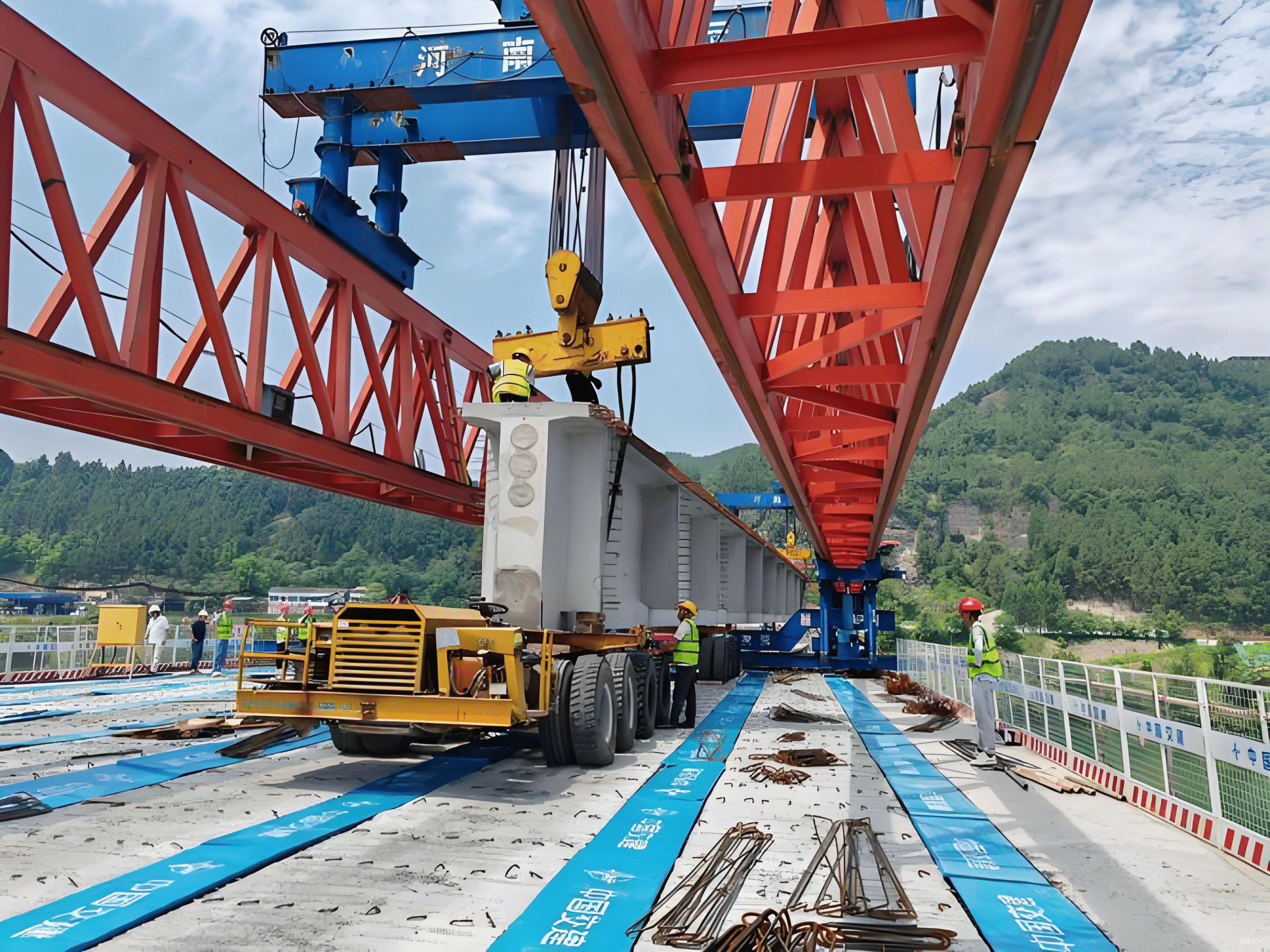
In the sustainable development strategy of today’s bridge engineering, the maintenance, strengthening, and performance enhancement of existing bridges are no less important than the construction of new ones. This is particularly true in many countries, including China, where a vast number of T-beam bridges built in the 1980s, 90s, and early 2000s are now in service. These T-beam bridges often suffer from various defects due to rapidly increasing traffic volume, higher vehicle loads, material aging, and environmental erosion. Common issues include beam cracking, excessive deflection, and insufficient load-bearing capacity, all of which threaten operational safety and service life. Consequently, finding efficient, reliable, and economical bridge strengthening techniques is imperative. Among the various methods, external prestressing technology has emerged as a key solution for addressing the deficiencies in capacity and stiffness of T-beam bridges, garnering significant research and application worldwide. This article delves into the principles, design, construction, and effectiveness of this technology.
Common Defects in T-Beam Bridges and the Need for Strengthening
The T-beam section is a classic superstructure design known for its simple construction and light self-weight. However, its inherent structural characteristics also lead to common problems:
-
Diagonal and Vertical Cracks in the Web: This is one of the most frequent issues. It is primarily caused by principal tensile stresses exceeding the concrete’s tensile strength, especially near the supports where shear is high. Chronic overloading, prestressing loss, or insufficient reinforcement can accelerate crack propagation.
-
Excessive Mid-Span Deflection: Over time, prestress loss, concrete creep and shrinkage, and sustained overloading can lead to increasing downward deflection at the mid-span. This affects ride comfort and may exceed code limits, signaling a significant reduction in structural stiffness.
-
Insufficient Load-Bearing Capacity: Many older bridges were designed for lower load standards (e.g., HS20-44 or below) and cannot meet the demands of modern heavy traffic, making bridge load rating a critical activity.
-
Prestressing Tendon Corrosion and Anchorage Failure: For internally prestressed T-beams, improper grouting can lead to tendon corrosion, resulting in a loss of effective prestress and potential brittle fracture—a catastrophic scenario.
If left unaddressed, these defects create a vicious cycle, accelerating the bridge’s deterioration and potentially leading to structural failure. Therefore, strengthening existing T-beam bridges to enhance their capacity, stiffness, and crack resistance is essential for ensuring safety, extending service life, and conserving societal resources.
Principles and System Components of External Prestressing Strengthening
Technical Principle
External prestressing is an active strengthening method. Its core principle involves installing prestressing tendons outside the original T-beam (typically on both sides of the web or within boxes). Tensioning these tendons applies an external force (eccentric compression) to the beam that counteracts the effects of the existing loads. This active force:
-
Significantly Improves Structural Stress State: The induced reverse moment counteracts a portion of the moment caused by external loads, thereby reducing deflection.
-
Increases Load-Bearing Capacity: It directly enhances the flexural and shear capacity of the structure.
-
Closes Cracks and Inhibits New Ones: The applied compressive stress can close existing cracks and improve the section’s crack resistance.
-
Optimizes Stress Distribution: It reduces the stress levels in the original reinforcing and prestressing steel, allowing the structure to carry higher loads.
Compared to passive methods like bridge crack repair with epoxy injection or applying carbon fiber sheets, external prestressing actively adjusts internal forces, offering higher efficiency, better utilization of material strength, and simultaneous improvement of both stiffness and capacity.
System Components
A complete external prestressing system consists of three main parts:
-
Prestressing Tendons: Typically made of high-strength, low-relaxation steel strands, epoxy-coated strands, or prefabricated stays. Their corrosion protection is key to long-term durability. You can learn more about material specifications from authoritative sources like the Post-Tensioning Institute (PTI).
-
Anchorage System: The lifeline of the system. Anchorages are placed at the beam ends (dead-end and live-end) or on the top slab (intermediate anchors). They must be extremely reliable, safely transferring the immense prestressing force into the existing structure. Common anchorages include wedge and squeeze-type anchors.
-
Deviation and Positioning Devices: These are blocks or saddles attached to the web or diaphragms. They change the profile of the tendons to create the required eccentricity and provide support. Deviation blocks must be designed for adequate local compression and shear resistance to prevent concrete crushing.
Key Design and Construction Techniques
Design Considerations
Designing an external prestressing strengthening project is complex and must adhere to principles of safety, serviceability, economy, and aesthetics, carefully considering the effects of secondary loading.
-
Condition Assessment and Load Rating: A thorough inspection and evaluation of the existing bridge is mandatory before design. This includes determining material strengths, concrete carbonation depth, crack mapping, existing rebar condition, and geometry. Accurate data is crucial for a reliable structural analysis.
-
Tendon Profile and Layout Design: The tendon profile (typically polygonal or harped) is designed based on the strengthening objective (increasing flexural or shear capacity). The profile determines the contribution of the prestress to the mid-span moment and support shear.
-
Determination of Prestress Degree: The jacking stress is a core design parameter. It requires optimization through detailed analysis, balancing the existing stress state, and anticipated prestress losses (friction, anchorage set, etc.).
-
Anchorage and Deviation Block Design: This is the most critical aspect. Detailed local stress analysis, often using Finite Element Analysis (FEA) software, is essential to ensure stress diffusion and prevent local failure. Supplemental reinforcement with rebar or bonded steel plates is usually required.
-
Secondary Load Effects and Verification: Since external prestress is applied to a beam already under load (with existing deformations and stresses), “secondary effects” must be considered. A comprehensive check of the strengthened T-beam under serviceability (stresses, cracks, deflection) and ultimate (flexure, shear) limit states is performed.
Construction Sequence and Quality Control
Proper construction is the final step to ensuring effectiveness. The main sequence is:
-
Preparation and Layout: Clean the site and precisely mark locations for anchorages and deviation blocks.
-
Surface Preparation and Drilling: Roughen and clean concrete surfaces for bonding or doweling. Drill holes as per design and clean them thoroughly.
-
Installing Anchorages and Deviation Blocks: Install dowel bars, assemble rebar cages, set formwork, and cast high-strength non-shrink concrete with proper curing. Alternatively, use steel anchorages/deviation devices secured with chemical anchors and high-strength adhesives.
-
Tendon Installation: Thread the prestressing strands through the designated ducts or sheaths and install the anchorages.
-
Stressing and Lock-Off: Jack the tendons symmetrically and synchronously according to the designed sequence and load increments. Control is primarily by stress, with elongation as a check. Record all data meticulously.
-
Corrosion Protection: After stressing, grout the ducts (for replaceable systems, use corrosion-inhibiting grease and HDPE sheathing) and cap the anchorages with concrete for final protection.
Key Quality Control Points: Bond quality at concrete interfaces, hole depth and cleanliness, pull-out resistance of dowels, accuracy and synchronization of jacking, and the integrity of the corrosion protection system.
Advantages, Limitations, and Future Perspectives
Significant Advantages
-
Highly Effective: Simultaneously and significantly improves load-bearing capacity, stiffness, and crack resistance.
-
Minimal Traffic Disruption: Work is primarily external, allowing for “strengthening under traffic” with minimal lane closures.
-
Inspectable and Replaceable: External tendons are accessible for regular inspection and maintenance, and can be designed for future replacement, facilitating whole-lifecycle bridge management.
-
Negligible Weight Increase: Adds minimal self-weight compared to section enlargement methods.
Existing Limitations
-
Complex Anchorage Design: The reliability of the anchorage system is paramount and requires high design and construction expertise.
-
Fatigue and Vibration: External tendons can vibrate under dynamic loads, requiring adequate dampers and careful fatigue design. Resources from organizations like the Federal Highway Administration (FHWA) provide valuable guidelines on these aspects.
-
High Protection Requirements: Exposed tendons need robust fire and corrosion protection.
-
Damage to Original Structure: Installing anchorages and blocks requires drilling into the original concrete, causing some local damage.
Future Outlook
Advancements in material science and technology are pushing external prestressing towards higher performance, intelligence, and durability:
-
New Materials: Using CFRP (Carbon Fiber Reinforced Polymer) or BFRP (Basalt FRP) tendons offers high strength-to-weight ratio and superior corrosion resistance, eliminating the rust problem of steel strands.
-
Smart Technology and Monitoring: Integrating sensors like Fiber Bragg Gratings (FBG) into tendons or anchorages enables real-time monitoring of force, vibration, and temperature, creating a smart strengthening system for bridge health monitoring.
-
Standardization and Modularization: Promoting standardized, modular designs for anchorages and deviation blocks can reduce costs and improve reliability.
-
Refined Analysis and Design: Using BIM and advanced FEA software allows for detailed simulation of the entire strengthening process, leading to more optimized and safer designs.
Conclusion
External prestressing technology stands as a mature and highly effective active strengthening method for addressing deficiencies in existing T-beam bridges. By actively applying a reverse load effect, it fundamentally improves the structural performance of the original member. Despite challenges in anchorage design and vibration control, the future of this technology is bright, driven by new materials, monitoring techniques, and refined analysis tools. Continued research, improved design codes, and optimized construction practices will further establish external prestressing as a cornerstone technique for the maintenance, rehabilitation, and upgrade of our vital bridge infrastructure, ensuring its safety and serviceability for decades to come.
 Email to polarismok@ptgrouting.com or message on WhatsApp: +86-13677722014
 Ask about our latest post tensioned systems catalogue and free sample